A SaaS platform for B2B success through UX and CX Discovery
A SaaS platform for B2B success through UX and CX Discovery
My Role
Research Service Design UX/UI
Research Service Design UX/UI
Platforms
SAAS
SAAS
Year
2022
2022
Duration
3 months
3 months

Overview
B2B companies often focus on operations and technology, leaving customer experience in the background. However, this mindset is changing — companies that invest in UX are seeing stronger engagement and business growth.
Leaders like Amazon, Spotify, and Google have shown the power of personalization in creating meaningful connections. Inspired by them, this project focused on building a B2B platform centered on user experience, clarity, and measurable impact.
B2B companies often focus on operations and technology, leaving customer experience in the background. However, this mindset is changing — companies that invest in UX are seeing stronger engagement and business growth.
Leaders like Amazon, Spotify, and Google have shown the power of personalization in creating meaningful connections. Inspired by them, this project focused on building a B2B platform centered on user experience, clarity, and measurable impact.
Goal
I conducted a comprehensive mapping with the CX team at TriggoLabs, where I worked. Using Design Thinking and User-Centered Design methodologies, I led a 90-day Discovery focused on the end-to-end customer journey and experience in the retail sector. My goal was to identify pain points and opportunities to design an ideal scenario and journey.
I conducted a comprehensive mapping with the CX team at TriggoLabs, where I worked. Using Design Thinking and User-Centered Design methodologies, I led a 90-day Discovery focused on the end-to-end customer journey and experience in the retail sector. My goal was to identify pain points and opportunities to design an ideal scenario and journey.
Process
Process
We followed the concept of User-Centered Design, focusing on user interactions and their needs at each stage. The design process involves understanding user behavior through research and creating products and services that truly make sense for them.
We followed the concept of User-Centered Design, focusing on user interactions and their needs at each stage. The design process involves understanding user behavior through research and creating products and services that truly make sense for them.


Competitor Analysis
Competitor Analysis
The goal of this phase is to dive deep into the company’s business, evaluating aspects related to technology, operations, and people involved in the retail customer journey.
It’s about understanding how your brand is positioned in the market compared to other companies targeting the same audience.
This type of analysis helps identify where your business stands against competitors and what needs to be improved to attract and retain more customers.
The goal of this phase is to dive deep into the company’s business, evaluating aspects related to technology, operations, and people involved in the retail customer journey.
It’s about understanding how your brand is positioned in the market compared to other companies targeting the same audience.
This type of analysis helps identify where your business stands against competitors and what needs to be improved to attract and retain more customers.
Immersion
Immersion
The goal of this phase is to dive deep into the company's business, assessing aspects related to technology, business, and people involved in the retail customer journey. The mapping of pain points and opportunities within the retail journey is conducted through interviews with internal process stakeholders.
The goal of this phase is to dive deep into the company's business, assessing aspects related to technology, business, and people involved in the retail customer journey. The mapping of pain points and opportunities within the retail journey is conducted through interviews with internal process stakeholders.

Immersion Results
Immersion Results
Through the immersion phase, we mapped the company’s main pain points and opportunities for improvement across processes, culture, and technology.
The analysis revealed that most challenges are process-related (50.43%), followed by cultural (27.35%) and technological (22.22%) factors.
Manual routines, lack of data integration, and communication silos directly impact customer experience maturity.
We also identified the need to foster a customer-centric mindset, unify internal processes, and strengthen CX across all departments.
Through the immersion phase, we mapped the company’s main pain points and opportunities for improvement across processes, culture, and technology.
The analysis revealed that most challenges are process-related (50.43%), followed by cultural (27.35%) and technological (22.22%) factors.
Manual routines, lack of data integration, and communication silos directly impact customer experience maturity.
We also identified the need to foster a customer-centric mindset, unify internal processes, and strengthen CX across all departments.


Qualitative Research
Qualitative Research
The goal of this phase was to understand who our customer is and how the brand impacts their journey and perception of the service.
24 Interviewees 14 Interview Hours 115 Pain Points Mapped
Main Pain Points
Throughout the in-depth interview process with end customers, we mapped 115 pain points.
During the interviews, we observed that most of the issues affecting customers are directly related to Brink’s internal processes, which have the greatest impact on their daily experience and journey.
58% Process 24% Technology 18% Culture
The goal of this phase was to understand who our customer is and how the brand impacts their journey and perception of the service.
24 Interviewees 14 Interview Hours 115 Pain Points Mapped
Main Pain Points
Throughout the in-depth interview process with end customers, we mapped 115 pain points.
During the interviews, we observed that most of the issues affecting customers are directly related to Brink’s internal processes, which have the greatest impact on their daily experience and journey.
58% Process 24% Technology 18% Culture


Research Conclusion
Research Conclusion
Process-related pain points were consistent among all interviewed customers. Many described the company as reactive, facing delays, communication gaps, and lack of transparency across internal areas.
Billing and pricing discrepancies were also frequent, directly impacting the customer journey. Post-sales service is perceived as inefficient and impersonal, leading clients to escalate issues to managers or local branches to get faster results especially among large accounts.
Process-related pain points were consistent among all interviewed customers. Many described the company as reactive, facing delays, communication gaps, and lack of transparency across internal areas.
Billing and pricing discrepancies were also frequent, directly impacting the customer journey. Post-sales service is perceived as inefficient and impersonal, leading clients to escalate issues to managers or local branches to get faster results especially among large accounts.
Stakeholder Map and Paints
Stakeholder Map and Paints


Macro Journey
Macro Journey
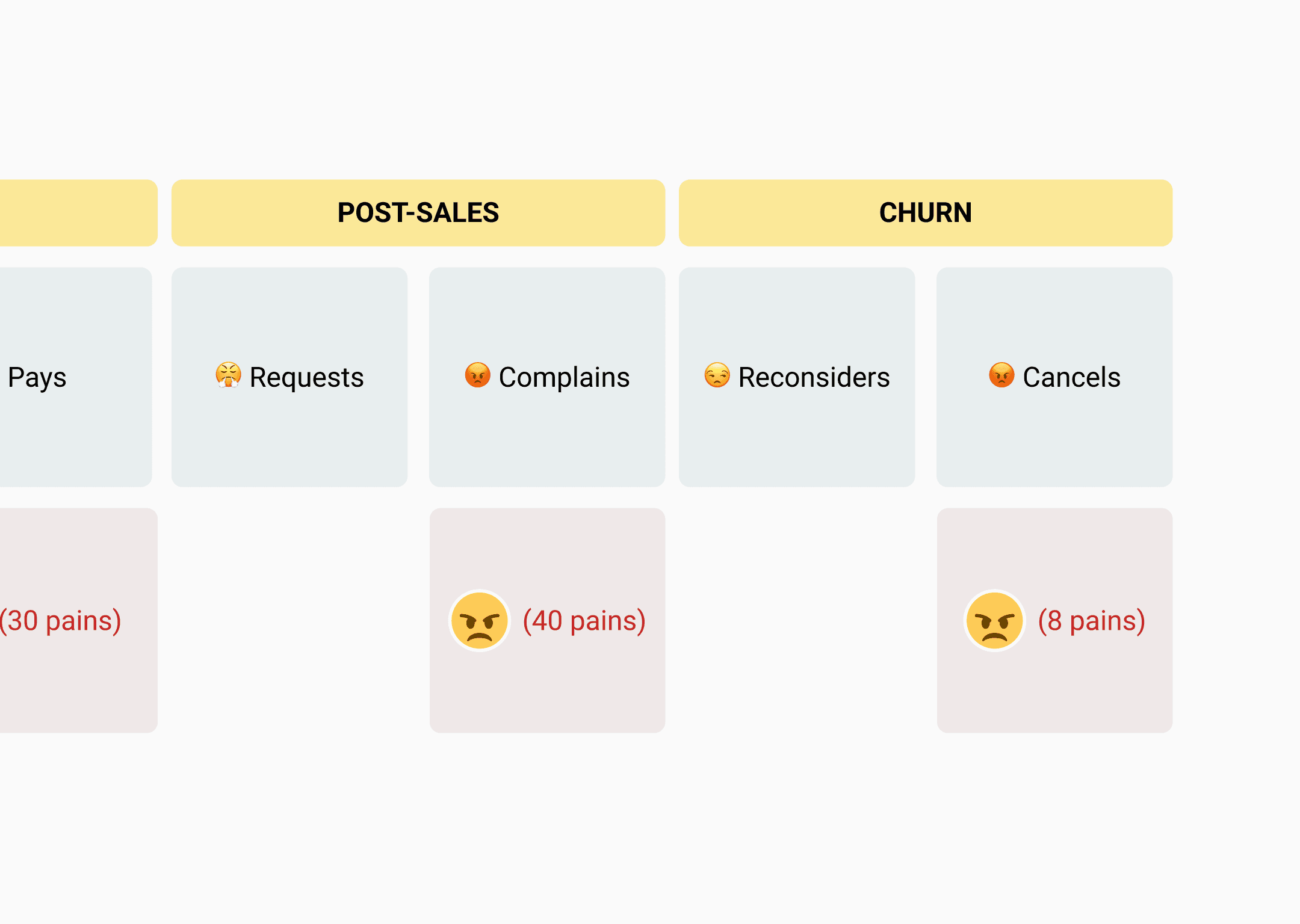
We built the macro journey focusing on retail clients of different sizes (S, M, and L), from the moment of interest, service acquisition, installation, daily use, and post-sales, up to potential churn.
A holistic view of processes, technologies, and agents that support the end-customer journey.
We built the macro journey focusing on retail clients of different sizes (S, M, and L), from the moment of interest, service acquisition, installation, daily use, and post-sales, up to potential churn.
A holistic view of processes, technologies, and agents that support the end-customer journey.




The Prototype
The Prototype


Usability Test
Usability Test
🎯 What is the goal of the usability test?
Validate the steps designed in the To Be journey from the moment of service acquisition to the post-sales stage.
The Tasks
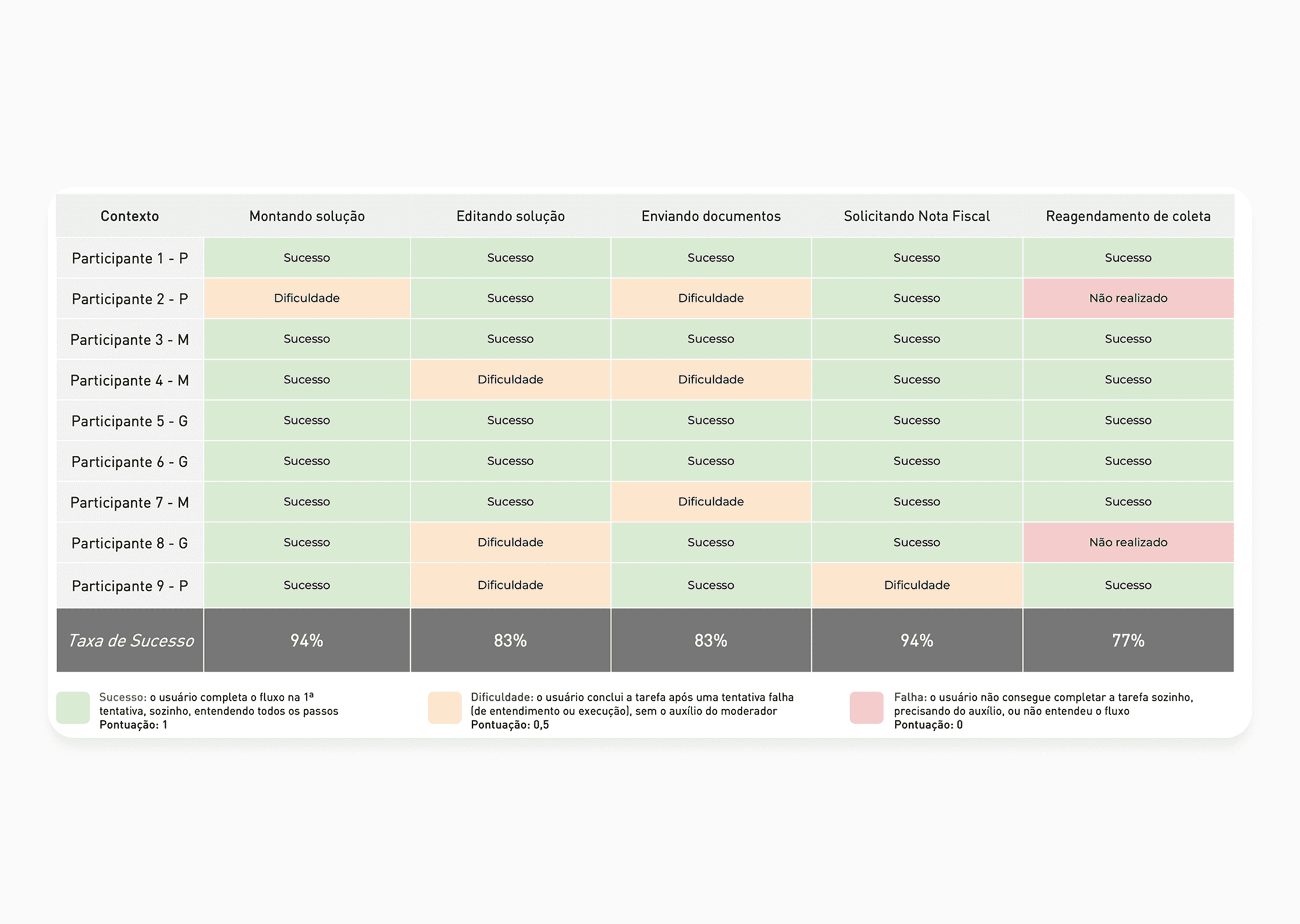
The proposed tasks aimed to validate the To Be journey — from the moment of initial interest to the post-sales stage.
To achieve this, we followed success, difficulty, and failure criteria at each step of the journey as users navigated through the screens, obtaining the following results:
🎯 What is the goal of the usability test?
Validate the steps designed in the To Be journey from the moment of service acquisition to the post-sales stage.
The Tasks
The proposed tasks aimed to validate the To Be journey — from the moment of initial interest to the post-sales stage.
To achieve this, we followed success, difficulty, and failure criteria at each step of the journey as users navigated through the screens, obtaining the following results: